
Introduction: The Weight of Juggling Multiple EMIs
In today's credit-driven economy, it is incredibly common for an average Indian household to juggle multiple active credit lines. From personal loans and credit cards to auto loans and consumer durable financing, managing different Equated Monthly Installments (EMIs) with varying interest rates and due dates can feel like walking a financial tightrope. Beyond the obvious strain on your monthly budget, the psychological weight of multiple debt obligations can lead to severe stress and decision fatigue.
When you are ready to reclaim your financial freedom, two popular strategies stand out in personal finance: the Debt Snowball Method and the Debt Avalanche Method. While both require discipline and require you to continue making minimum payments on all your debts, their approach to tackling the principal amounts is fundamentally different.
Method 1: The Debt Snowball Method (Psychological Momentum)
The Debt Snowball Method, famously popularized by financial experts, prioritizes psychological wins over pure mathematical efficiency.
How it works: You list all your debts from the smallest outstanding balance to the largest, regardless of the interest rate. You pay the minimum EMIs on all your debts, but you channel any extra funds you can scrape together toward paying off the smallest balance first. Once that smallest debt is cleared, you take the amount you were paying on it and roll it over to the next smallest debt, much like a snowball rolling down a hill and gaining size and momentum.
If you have a ₹15,000 consumer durable loan for a smartphone, clearing it off quickly gives you a massive psychological boost. It reduces the absolute number of EMIs you track every month, making you feel victorious and motivated to tackle the larger, more daunting personal or car loans next.
Method 2: The Debt Avalanche Method (Financial Efficiency)
The Debt Avalanche Method appeals to the logical, mathematically inclined borrower. It is designed to save you the maximum possible amount of money on interest over the life of your debts.
How it works: Instead of looking at the balance, you list your debts from the highest interest rate to the lowest. You continue paying minimum EMIs on everything, but you aggressively throw all extra cash at the debt with the highest interest rate. Once that high-interest debt is eliminated, you move down the list to the debt with the next highest rate.
Credit cards in India can carry exorbitant annualized interest rates (often ranging between 36% to 42% p.a.), while a car loan might sit at 9% p.a. By targeting the credit card debt first, you stop the aggressive compounding of high interest, effectively saving thousands of rupees that would have otherwise gone to the bank.
A Real-World Scenario
Let's walk through a hypothetical scenario of an average Indian borrower, Rahul, who has ₹10,000 in surplus cash every month after paying his minimum EMIs.
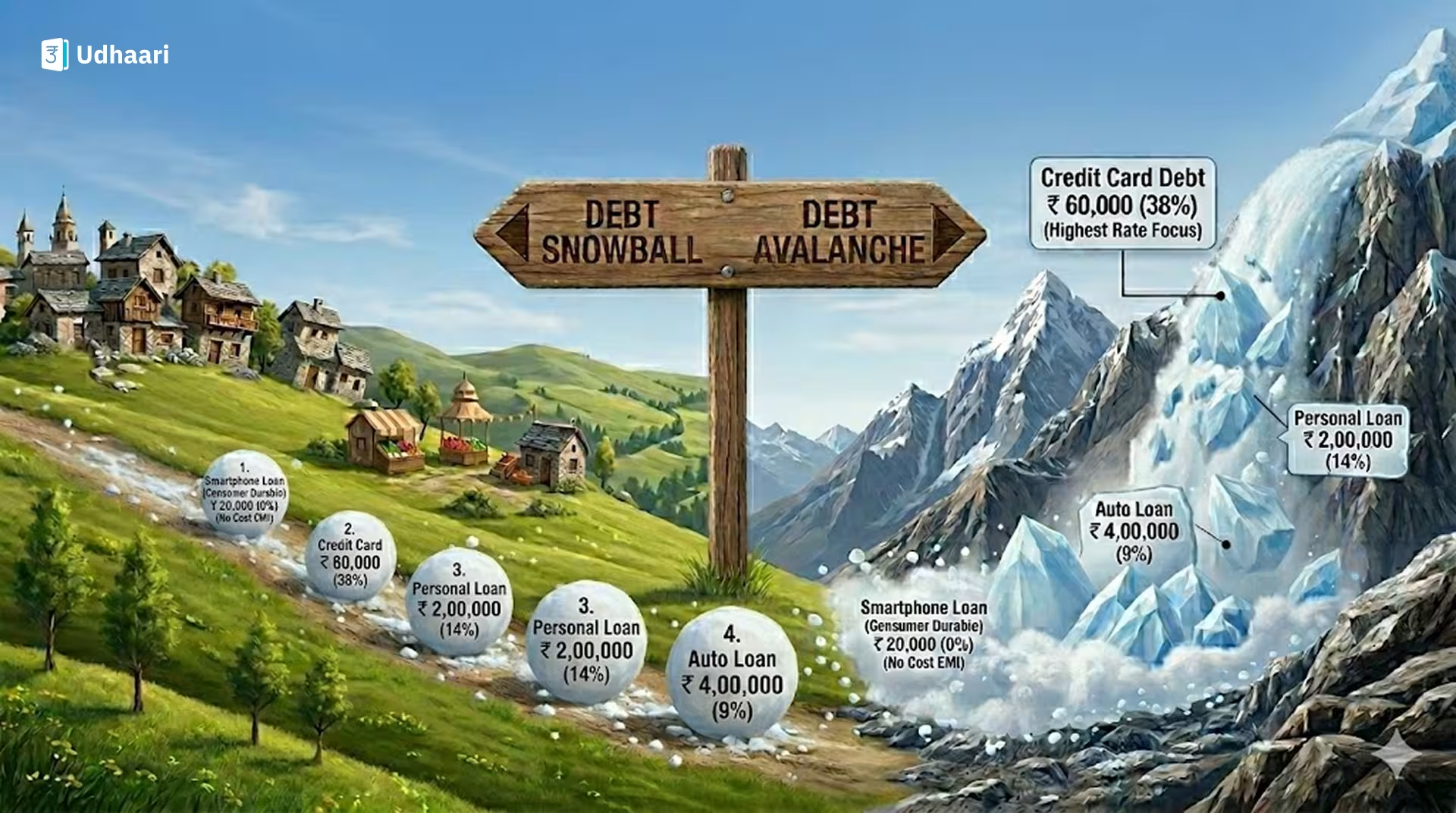
| Debt Type | Outstanding Balance | Interest Rate (Yearly) |
|---|---|---|
| Smartphone Loan (Consumer Durable) | ₹ 20,000 | 0% (No Cost EMI) |
| Credit Card Debt | ₹ 60,000 | 38% |
| Personal Loan | ₹ 2,00,000 | 14% |
| Auto Loan | ₹ 4,00,000 | 9% |
Applying the Snowball Method
Order of payoff: Smartphone → Credit Card → Personal Loan → Auto Loan
Rahul tackles the ₹20,000 smartphone loan first. With his extra ₹10,000, he clears it in just two months. He experiences immediate relief and a quick win, which motivates him to aggressively attack his credit card debt next. However, during those two months, his 38% credit card debt has accumulated significant interest.
Applying the Avalanche Method
Order of payoff: Credit Card → Personal Loan → Auto Loan → Smartphone
Rahul targets the ₹60,000 Credit Card debt first because of its punishing 38% interest rate. It takes him over six months of dedicated extra payments to clear it. He doesn't get a "quick win" like he would have with the smartphone, requiring immense self-discipline. But, mathematically, he saves a massive amount on interest charges, making him debt-free months earlier than the Snowball method.
Conclusion: Choosing the Right Method for You
There is no universally "perfect" method, the right choice depends entirely on your personality and financial habits.
- Debt Snowball method if you get easily overwhelmed, need quick visual progress to stay motivated, and want to reduce the total number of EMIs hitting your bank account as fast as possible.
- Debt Avalanche method if you are highly disciplined, driven by numbers, and want to pay the absolute minimum in interest charges over time.
Regardless of the method you choose, the most crucial first step is to create a clear dashboard of all your liabilities and Udhaari helps you do just that. Write down every loan, its outstanding balance, its interest rate, and its EMI date. Whether you conquer the hill with a snowball or crush interest rates with an avalanche, taking deliberate action today is the ultimate key to financial freedom.
— Thanks for reading.